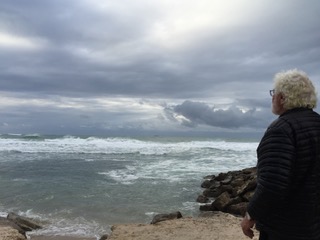
Birthdate: January 8, 1941 URS date: June 19, 2021
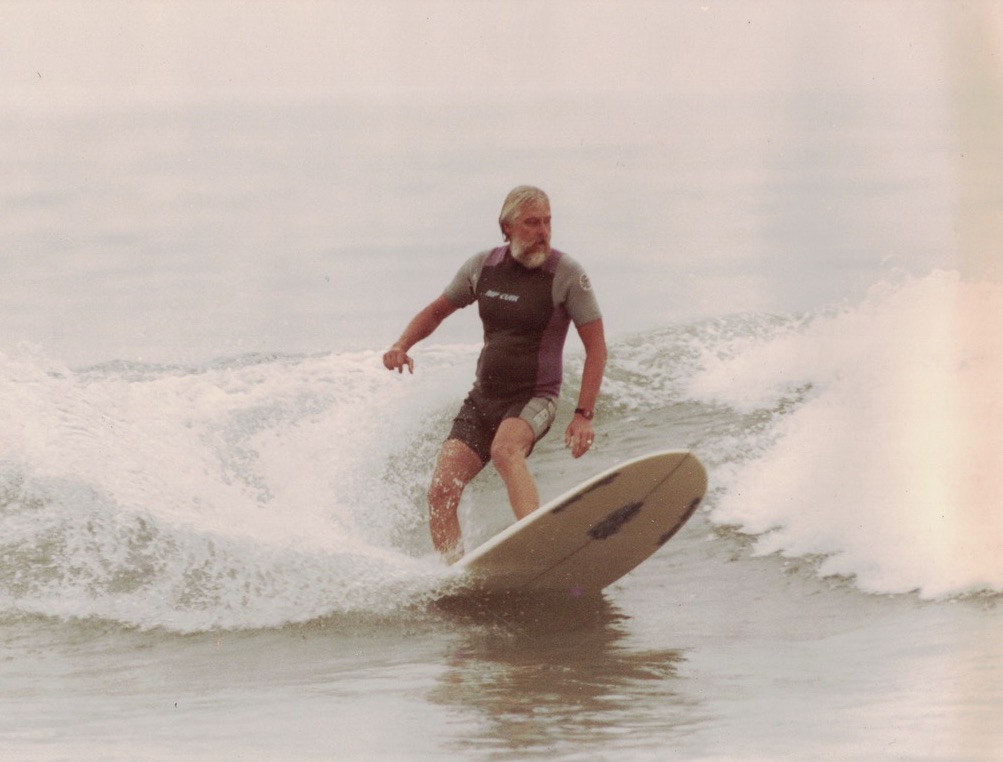
Larry Hafiz Decker, Ph.D., passed into the light on June 19, 2021, draped in Pir Vilayat’s shawl. His last words were Allahu Akbar. Beloved husband of 56 years, father of our two beautiful boys, Quddus Shawn Decker and Oriel Josh Decker, Grandfather of our precious grandchildren, Ava and James, many relatives and friends, psychologist, University professor, and author of two books. He was initiated into the Sufi Inayattya Order in 1973 and has served the message wearing many hats. Swimmer, surfer, world traveler and so much more. Love, lover, beloved one.
-Musawwira Beverly Decker
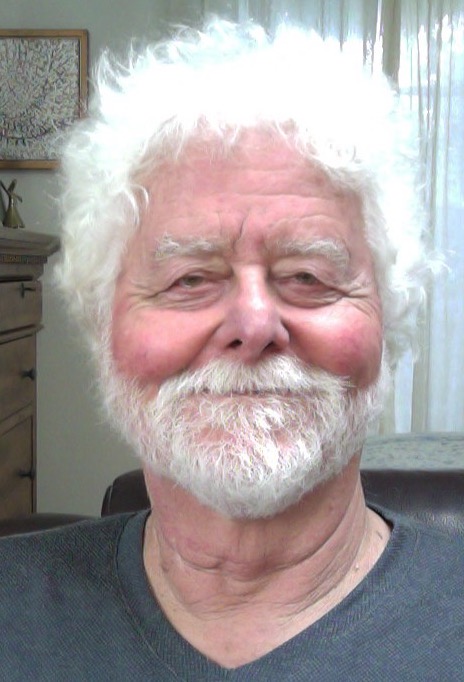
Dr. Hafiz Larry Decker, My beloved husband of 56 years, father of our two beautiful boys, Quddus Shawn Decker and Oriel Josh Decker, Grandfather of our precious grandchildren, Ava and James, many relatives and friends, member of the Sufi Inayatiyya Order for 48 years, wearing many hats: psychologist, author, surfer, world traveller and so much more, love, lover, beloved one. Musawwira Beverly Decker

Rumi
“On the day I die, when I’m being carried
Toward the grave, don’t weep. Don’t say,
He’s gone! He’s gone. Death has nothing to do with going away. The sun sets and
The moon sets, but they’re not gone.
Death is coming together. The tomb
Looks like a prison, but it’s really
Release into union. The human seed goes
Down in the ground like a bucket into
The well where Joseph is. It grows and
Comes up full of some unimaginable beauty.
Your mouth closes here, and immediately
Opens with a shout of joy there.”
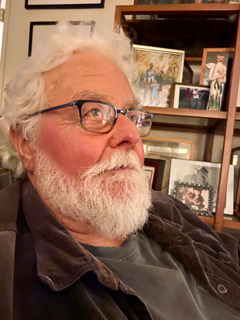
My first memory of Hafiz was in 1975(?). I heard about him, from a woman with whom I was living, who was in one of his classes at Cal State Dominguez Hills. Turned out he was using a book by someone named Hazrat Inayat Khan (I think it was The Smiling Forehead but not sure..). He told his class about the impending visit to LA of his teacher, Pir Vilayat Khan. who was planning to present the Cosmic Mass, and was seeking people to participate. Sounded interesting, so I went to hear PVIK, got really interested, cast in the Mass, then initiated, and am still on this Inayati sufi path 40+ years later – all from Hafiz’s class…
Hafiz was a generous soul, loving, funny and careing. I will miss him, and I wish peace and love to all his family.
Remembering his huge smile!
Dear Musawwira,
All love and comfort to you as you pass through this painful transition. I am so glad that I had the opportunity to be with you and Hafiz on retreats in New Mexico. He brought such kindness, strength and compassion to others with his shining presence. Thank you both for your generously in offering the online Sangitha classes. A true high point for me was when Hafiz offered the Darud. He led us into a profound sacred space with such beauty. Remembering those connections is a gift. I send you both deep gratitude and peace.
Ruya
Since Hafiz’s passing, I have been thinking about him and the book he wrote, which I was privileged to edit, and his life’s work. And I want to share his book with you so that you might have the same transformative experience that I have been blessed to have—both while giving feedback to the author early on, and in reading the book once it was in print.
The Alchemy of Combat, by Larry R. Decker, PhD, is a remarkable, healing book: a Guide for—as the sub-subtitle puts it—“Therapists, as Well as Family, Friends, Loved Ones, Colleagues, and Others Who Care.” And what this book is about, reflected in its subtitle, is: “Transforming Trauma in Combat Veterans.”
Hafiz was a psychotherapist who spent decades of his professional life working with veterans of wars going back as far as to World War II and as recent (the book was published in 2014) as the Iraq War. As a human being, he was a powerful man—deeply feeling, passionate, with a large presence—and committed to transforming suffering through psychological and spiritual awareness.
He got into working with veterans in 1980, having been licensed as a therapist in 1977. Not a veteran himself, he began as a specialist in Posttraumatic Stress Disorder (PTSD). Working with veterans was a logical outgrowth, and he was a supervisor at a Vets Center for 25 years, then worked with the Department of Veterans Affairs. He was also a tenured professor at a state university in California and taught for over 20 years, and published many technical articles, including on the spiritual nature of trauma. His own spiritual orientation was Sufism, but as he made known in his book, any spiritual orientation or approach would work to transform Posttraumatic Stress Disorder (PTSD) into Posttraumatic Growth (PTG). He was a mighty, feeling force in life, a “warrior” for God in the truest, most human sense. And his book is certainly one part of his living legacy.
The book begins, as so many books do, with an Introduction. And among the things Hafiz introduces is the notion that veterans require more than simply to be re-integrated into civilian life on their return.
In his words:
There is more than just helping veterans adjust to civilian life. If treatment has as its focus emotional and behavioral adjustment, then the value of the trauma is negated. If veterans are simply retained to be proper civilians and to reduce their inner anguish, then their combat is reduced to a pathological experience instead of a transformative one….
He writes:
I am reminded of the Gordian Knot. In this myth, if you could untie the knot you would become the ruler of Asia. As some legends have it, Alexander the Great simply took out his sword and sliced it open. Perhaps the knot was a symbol of our lives, and if we could unravel the mystery of our existence we would rule our inner world. The therapies EMDR and TFT seem more like Alexander’s sword than the loosening of our knotted minds.
Hafiz continues:
If there is not a repression of emotion, not a decrease of conscious memory, and not a denial of experience in treatment, then veterans’ anger can be transformed into productive outrage, their depression can be a healing withdrawal into the inner life, and their anxiety can turn into excitement for life’s possibilities….
If we are going to honor veterans’ experiences, as mentioned earlier, it is important not to simply try to help them adjust to civilian life, but to also help them use what they learned in combat to be more conscious, effective, and powerful individuals in civilian society. Out of their combat PTSD can come Posttraumatic Growth (PTG)—or, in other words, an increase in awareness, greater compassion, and a deeper understanding of life.
There are stories in this affecting book not only of veterans’ experiences during war, but also of how Hafiz “holds” these men and women in his energetic field and his heart, encouraging them—powerfully yet noninvasively—to unburden themselves of their undigested, lonely experiences (and what they have, to that point, made of them) in a way that allows for the mercy of healing to open in and for them. The regaining of trust after trauma—especially societally sanctioned trauma, and in a situation where the return into civilian life is too often lacking the humane supports required—is not a given. Veterans carry stories in their living memories that don’t usually go away on their own. What Hafiz supplied, in addition to a huge heart, a willing ear, and a psychologically sophisticated understanding, was a spiritual witness, enabling what was inside these veterans to frequently be transformed. As he writes a bit later in the Introduction:
In my work I have found that simply helping veterans adjust to contemporary society does not take advantage of the alchemy of combat. Alchemy means that there is a transformation of the personality as a result of traumatic experiences. Combat changes world-views. That change of view gathers and mixes the experiences of sudden death, mangled bodies, and unpredictable tragedy with heroic self-sacrifice.
But veterans with PTSD are hesitant to acknowledge their uplifting of spirit in their willingness to sacrifice, their inspiration in overcoming horrible challenges, and their dedication to higher ideals. Because of veterans’ despair over their killing, they retreat from these higher experiences, believing themselves to be unworthy of those feelings of honor. Instead they choose to adopt the relative security of a flat worldview dominated by society’s values of technology and pleasure.
The suggestions for treating combat PTSD, explored in this book, not only help veterans adjust to civilian life; it also helps them use their experiences to find their meaning and their purpose. Inherent in meaning and purpose is the spiritual nature, the manifesting of the highest ideals…. Alchemy is not a bloodless transformation of the personality but a dynamic transcendence that awakens our inner depths.
I was saddened to hear of Hafiz’s recent passing, but also very grateful for having known him and getting to edit his book, which put me into deeper, word-by-word contact with the material than had I simply come upon it as a reader.
Looking at the book now, seven years after its publication, I marvel at its timelessness. It will go out of style only once war has; and even then, should we all be so blessed as to be able to refer to war as a thing of the past, The Alchemy of Combat will endure as a fearless, passionate, spiritual documentation of how even those who have been through the worst of humanity’s ways of addressing differences can find healing, meaning, and even transcendence—bringing a brilliant, contagiously transformative light out of the dark.
The Alchemy of Combat is a beautiful legacy, not only for those who knew Hafiz, but for humanity. If you ever have known or been related to a veteran—or even if you haven’t, since this book is such an education in itself—I encourage you to read it. It will deepen your own humanity. Rest in peace, Hafiz. You’ve served us well!
–Haqiqa Naomi Rose, June 2021
Book details:
Title: The Alchemy of Combat: Transforming Trauma in Combat Veterans: A guide for therapists, as well as family, friends, loved ones, colleagues, and others who care.
Author: Larry Decker, PhD.
Foreword: Karl Malantes, author of Matterhorn and What It Is Like to Go to War.
Publisher: Suluk Press (New Lebanon, NY: 2014), http://www.omegapub.com
You can order the book from the publisher: http://sulukpress.wpengine.com/author/decker-larry-r
My first memory of Hafiz was at a summer camp near Nevada City sometime in the late 70s. Pir Vilayat was taking written questions from retreatants and someone asked about the need of a vegetarian diet on the spiritual path (and clearly angling for The Right Answer being Yes). Pir Vilayat responded that he was personally on a restricted diet that included meat and so not the best person to ask, and handed the microphone to Hafiz to answer. Hafiz said, “Well, I really like a thick, rare steak.” I figured this was someone I should get to know.
Hafiz was totally dedicated to the Message and to the integration of psychodynamic work & spiritual practice. There was just no b.s. about him. He was real, he was authentic, he had tremendous clarity, and he was really grounded & integrated as well as being deeply spiritual.
He was a genuinely *good* man, in all ways that I could see, and one of the few in this life who does not need people fibbing polite tributes at his memorial.
I knew Larry from twenty years of VA counseling and after he retired. He helped thousands of combat veterans and we all remember him like a brother, so sad to hear of his passing. He loved Beverly and his family and friends. He was the only person who ever recited poetry to me and gave me hope when I was trying to cope with the VA. I loved him very much.
Larry was my husband’s brother in law. Through our my Dungan family thanksgiving and other family events, I knew Larry. He was a wonderful father to his two boys. He taught them to surf and enjoy the water. He took time from his busy professional life to play with his boys. One of my favorite photos is Larry and the boys running on the beach. Larry was a spiritual man who guided others and helped them. Peace brother
Leona
An important voice, first met via Alchemy of Combat and more recently in online classes as a gentle and powerful man, sharing what he loved, continuing his life’s pattern of helping others move forward.
He made a difference during his time of dust and his influence continues through his loving families, of flesh and of heart, those with whom he shared love, light and knowledge.
Thank you Hafiz Larry Decker, and thank you Allah for the paths that led to our brief time together. -Hakim
I first met Larry Decker with snot running out of my nose and my ribs sore from bawling aloud, unable to stop. I’d been to a free “workshop” on job stress being held by psychologists at our local school cafeteria. My wife had urged me to go, because of my increasingly really weird and sometimes frightening behavior. She thought it might be related to job stress. I sat down at the table with one of the psychologists and told him my symptoms. He was silent after hearing me. Then he asked, “Have you ever been in a war?” I burst into tears, I wailed, I screamed, I couldn’t stop myself from heaving with tears. Upon getting me somewhat coherent, the man handed me a card. He’d written Larry Decker’s name on it and an address. He said, “Go see this man. Go now. Not later. Now. I will call him and he will be expecting you.” There was a pause. “You have Post Traumatic Stress Disorder. Have you ever heard of it?” I had not. “Go see him. He’ll be waiting.” I did. Larry Decker was waiting. He may not have saved my life, but he certainly saved it, and the lives of my family, from years of pain, harmful behavior, disruption, and confusion. He guided me back to health. He helped relieve my suffering. Larry did a lot of good for a lot of people. There can be no better description of a life well led. I was blessed to know him and be one of those people. Karl Marlantes
I have had a hard time letting go of Hafiz, as I have been looking forward to more of the beautiful nurturing guidance that he and his amazing wife, Musawwira have shared with many over the years. We probably met back in 1973 which was at the beginning of my participation in Sufi Order events. Our friendship developed through contact at Sufi events over time. Both Hafiz and Musawwira on many occasions invited me to visit and when I did, their graciousness, and warmth, and wisdom always made me feel surrounded with love, acceptance and spiritual protection. They often would remind me to come take a retreat with them, and by last summer, I had such a longing to do that and to finally have the time to be guided by them through the experience. Covid hit, and it seemed better to wait. I was brokenhearted to hear from Musawwira that Hafiz was gravely ill, after I had tried to contact him to set up a retreat for this summer, after wishing to do so for so many years. Seemed like yesterday I was congratulating him on his 80th birthday. I was moved by reading his book, Alchemy of Combat, and moved enough that I wanted to promote his book to others, and hoped that I could use the inspiration from it to help those whom I’ve met struggling with PTSD. One memory that I hold dearly of Hafiz is visiting in their home when their first son was born. When he was old enough to crawl, Hafiz would invite friends over to simply sit with him and watch the baby. They would place him in the middle of the floor, and then all present would watch every little thing the baby did. Many people relate stories of Hafiz as maybe a bit acerbic, but to me, the memory of him as a passionately loving father moves me most. He also shared with me the importance of his grandchildren to him, and how much he wanted to spend time with them. His passion for his teacher, Pir Vilayat was equally profound. I know we met heart to heart in our love for our Sufi path, taking this as a deep and serious commitment. I will be ever thankful for all his efforts to know, share with, and understand me, which he took the trouble to do. He acknowledged, and affirmed me, in a very deep way, and for this I will will be forever thankful.
Forever grateful for sharing your precious being in and through
Murshid’s teachings. Rest In Peace, dear friend.
Love, Gayatri
From Murshid‘s Darud:
Allahhumma Sali Allah Sayyidina Muhammadin wa als Ali Sayyidina Muhammadin wa barak wa Salim.
Oh Allah, your benediction, Peace and Blessings upon our Lord
Muhammad ( or the Nuri Mohammad that encompasses the
Spirit of Guidance) and upon the people, family of the Prophet
May there be blessing and peace.